Car Destruction Engine Crash Tips for Satisfying Soft-Body Wrecks
Angle, speed, and target choice so Car Destruction Engine crumples look deliberate—not accidental spins.
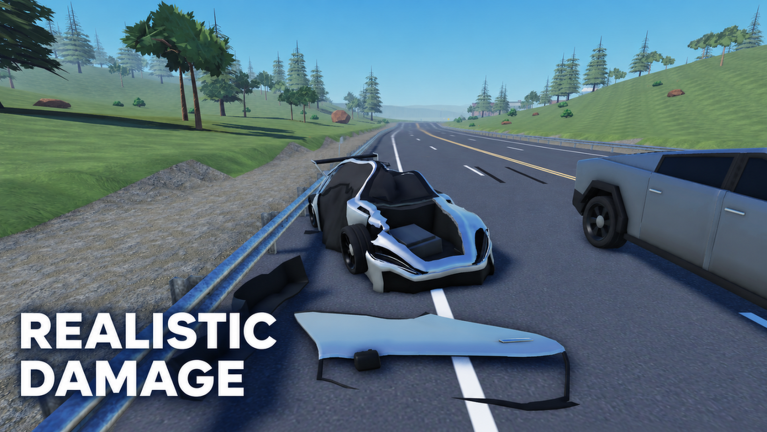
Soft-body crashes are the entire pitch of Car Destruction Engine. This guide turns random lobby chaos into intentional wrecks: how fast to hit, which angle folds metal cleanly, which targets waste your run, and how to reset for another take in busy 12-player servers. Pair these tips with Controls for clean inputs and Soft-Body Physics when you want the “why” behind crumple zones.
The experience is Early Access from RED x ICE Studios—maps and props can move. Principles below still hold when a specific ramp relocates: energy, alignment, and follow-through beat button mashing every time.
What a “good” soft-body crash looks like
A satisfying hit usually shows:
- Visible panel fold instead of an instant teleport delete
- Directional crumple (front, corner, or side) you can read on camera
- Momentum transfer into the object or second car without endless rubber bouncing
- Aftermath shape that stays crushed long enough to screenshot
If your wrecks look like the car bounced off a trampoline, you probably glanced at a shallow angle, hit too slowly for the mass involved, or overloaded the physics budget on a packed server. Fix technique first, then settings—see the physics guide for performance.
Tip 1 — Commit to a line before you floor it
The most common beginner mistake is correcting steer in the last half-second. Soft-body contact rewards a stable approach:
- Pick the impact point (barrier corner, wall, parked car, machine).
- Align early while still at medium speed.
- Feather throttle so you arrive straight.
- Add the final speed only when the nose is already aimed.
Twitch steering rotates the chassis. You then hit with a wheel or door skin instead of the crumple structure that looks best on film. Practice the align-then-accelerate loop from Getting Started until it feels boring.
Tip 2 — Match speed to the story you want
Speed is not always “more = better.”
| Goal | Speed band | Why it works |
|---|---|---|
| Study deformation | Low–medium | Panels fold slowly; easier to learn |
| Clip-worthy front crush | Medium–high | Enough energy to collapse the nose |
| Spectacular multi-car pile | High, staged | Needs space and a clear second target |
| Machine / press demos | Controlled crawl | Let the device do the work |
Over-speeding into a thin prop can launch you over it with little crumple. Under-speeding into a heavy wall may just scuff paint. Treat speed as a dial, not a dare.
Tip 3 — Prefer square impacts for readable crumple
Head-on or near head-on contact into a solid face compresses the front structure in a way cameras love. Glancing blows look flashy for a frame, then spit you sideways with less lasting fold.
When you want a side crumple, commit to a T-bone style line: your nose into their door, or a wall into your flank at a deliberate ninety-ish degrees. Half-hearted sideswipes mostly scrape.
Corner hits (offset frontal) often produce asymmetric folds—great for variety once you can land square hits on demand.
Tip 4 — Use the environment like a toolkit
Open pavement is for practice. Memorable wrecks usually involve:
- Flat heavy walls for textbook front crumples
- Barriers and posts for offset pinches
- Elevation changes that add nose-down attitude on landing
- Map machines (presses, smashers, and similar props when present) for controlled destruction without a high-speed setup
- Other players’ cars for multi-body chaos—communicate or accept grief risk
Scout quietly for thirty seconds after joining. In a max 12-player server someone will already be camping the best ramp; have a backup wall.
Tip 5 — Stage multi-step wrecks
The best community moments are rarely one button smash. Try a two-beat plan:
- Soften the car with a medium frontal into a wall.
- Immediately redirect the already-weakened chassis into a second object or machine.
Pre-damaged soft-body meshes often fold more dramatically on the second hit because structure is already compromised. Reset between failed takes—do not keep thrashing a car that has rubber-banded into an awkward pose.
Tip 6 — Camera and clip hygiene
- Keep the impact zone in frame before throttle.
- Avoid ultra-tight bumper cams until you can land the hit; third-person sells deformation better for learning.
- After the crash, pause movement for a second so the mesh can settle—soft-body solvers sometimes finish folding after the loudest frame.
- If you record, trim the boring approach; viewers care about the crumple.
Review creators who showcase Car Destruction Engine moments, then recreate the setup, not just the thumbnail pose.
Tip 7 — Respect server physics load
Soft-body on Roblox shares a budget. When twelve players simultaneously pulp cars:
- Impacts may feel delayed or mushy
- Parts may jitter before settling
- Lower-end devices hitch harder
Mitigations: hop to a quieter server, lower graphics quality, avoid stacking five wrecks in one intersection, and read performance notes in Soft-Body Physics. A “bad” crash on a melting server is often a performance issue, not a skill issue.
Tip 8 — Recovery is part of the craft
Upside-down after a perfect nose crush still counts as success—if you can reset fast. Use the recovery flow from Controls: stop fighting a dead pose, respawn or re-select the vehicle, and re-run the line. Clip hunters who reset in under fifteen seconds get five times the takes.
Tip 9 — Pick cars with intent
Not every vehicle crumples the same way. Heavier or stiffer models may push props farther; lighter shells may accordion sooner. Use the Tier List as a community compass for which cars feel satisfying, then validate in your own tests. Early Access balance can shuffle the ranking overnight—re-test after Updates.
Tip 10 — Ignore fake shortcuts
As of November 2026 research there are no confirmed active promo codes and no widely listed game-specific scripts for Car Destruction Engine. “Instant best car” codes in random chats are usually bait. Check Codes and Scripts for living status instead of installing injectors that risk your account. Skillful approaches beat cheats that break soft-body sync anyway.
Practice playlist (one session)
- Five low-speed square wall hits — study fold direction.
- Five medium-speed offset fronts — learn asymmetric crumple.
- Three machine or press destructions if available — controlled finishers.
- Two staged double-hits — soften then finish.
- One “public chaos” run in a full server — adapt lines under pressure.
Log what failed (angle, speed, target, lag). Iterate. Soft-body mastery is a feedback loop, not a single secret ramp.
Related reading
- Getting Started — first-hour checklist
- Controls — driving and respawn
- Soft-Body Physics — crumple and performance deep dive
- Guides Hub — full tutorial map
- Updates — patch awareness
Drive with purpose. The metal will tell you when the line was right.
Frequently Asked Questions
Quick answers to the most common questions.
Why do my crashes bounce instead of crumpling?
Usually a shallow angle, too little energy for the target, or a busy server straining soft-body simulation. Square up the hit, adjust speed, and try a quieter lobby.
What is the best speed for soft-body crashes?
It depends on the goal. Use low–medium speed to study folds, medium–high for clip-worthy front crumples, and controlled crawls when map machines do the crushing.
Should I aim for other players' cars?
Multi-car hits look great but expect interference in 12-player servers. Have a solo wall backup if someone steals your line.
Do I need scripts or codes for better crashes?
No. As of November 2026 research there are no confirmed active codes and no solid game-specific script listings. Technique and physics understanding matter more.
Where do I learn why the metal folds that way?
Read the Soft-Body Physics guide for crumple zones, deformation behavior, and performance tips that explain what these crash setups are doing under the hood.